Does summer vacation mean a road trip and visiting a historic site or two? Maybe taking in a ball game at that MLB stadium you’ve wanted to visit or touring an iconic Civil War battlefield?
After years of paying high monthly utility bills, the Hoffer family of Mt. Joy, PA, realized they needed to make a change in their home efficiency. After researching options, they found that geothermal heating and cooling could not only lower their monthly utility costs but could help them gain energy independence. The Hoffer family wasted no time and installed a geothermal heat pump in their home. They now experience up to 70% reduced monthly heating and cooling bills and up to 40% savings on hot water costs.
Earth Day is coming! Every April 22nd, we celebrate the planet that connects us all. This year’s theme, “Invest in Our Planet,” encourages us to choose the health and preservation of Earth.
Building a new house is an excellent opportunity to consider all the features you want for your home and what will best suit your needs. Any new construction project comes with many choices to make. The color of the kitchen backsplash, the closet’s location and design, and the type of heating and cooling system you will use are a few decisions you may have a say in. Perhaps you’ve been considering geothermal to cool and heat your home for a while. Or maybe geothermal is newer to you, but you want to see if it could work in your home. This article explains why you should consider geothermal for your new home or project.
The residential tax credit expired on December 31, 2025 through an act of Congress. A tax credit up to 30% continues to be available for commercial installations.
You may have heard about the recent positive changes to the geothermal federal tax credit making clean energy geothermal more affordable to you. The recent passing of the Inflation Reduction Act (IRA) 2022 means that the geothermal federal tax credit has increased from 26% to 30% until 2032, with a step-down plan through 2034. Read below for a summary of the updated tax credit rates for residential and commercial geothermal installations and a summary of how to apply for the tax credit.
Preparing your home for fall and the upcoming colder days can mean different things to different people. For some, preparation might include getting out the seasonal decorations, stocking up on fall-smelling candles, and drinking pumpkin spice-flavored drinks. For others, preparation can be more extensive, especially if you live in an area that gets very cold. Below are seven practical ways to prepare your home for fall and winter.
1. CLEAN OUT YOUR GUTTERS
Keeping leaves and debris out of gutters can save you money and prevent a headache down the road if the gutters get blocked up. Water can gather and stand around your home’s foundation when gutters are blocked, causing cracks. In addition, animals can make dirty gutters their home, which is best to avoid. Prevent water and roof damage by cleaning your gutters regularly.
2. MAKE YOUR HOME TIGHTER
Our homes are like envelopes; the tighter they’re sealed, the less air escapes from them. With the air getting colder, it’s a good idea to make your home tighter to help you stay warm and save you money. Weatherstrip or caulk small cracks in your home’s doors and windows to close any openings to the outside. You can also use spray foam to seal any gaps. If your windows are older, reglaze them to offset lots of weather exposure. Insulation is key.
3. CHECK SMOKE DETECTORS
Check and replace your smoke detectors and carbon monoxide batteries often and throughout your home. To keep track of your maintenance, you could place a piece of masking tape on the detector with the date you last changed the batteries. You should change the smoke detector batteries at least once yearly and carbon monoxide batteries every six months. Replace each smoke detector alarm every 10 years and carbon monoxide alarms every 7-10 years.
4. CLEAN YOUR FIREPLACE AND CHIMNEY
If you have a fireplace and chimney, you may be ready to use them regularly again. However, before starting it up for the first time, ensure it’s inspected and clean. Some experts say it’s best to clean your fireplace after every 50 uses or at least once a year. Even if you rarely use your fireplace, animals may make homes inside the chimney that you’ll want to remove. Do not rely solely on chimney cleaning logs to clean your chimney. Professional chimney sweeps can help you completely rid your chimney of buildup safely and efficiently.
5. STOCK UP ON SALT FOR ICE AND SNOW
Living in an area where there is snow and ice isn’t always easy. Stocking up on salt and anti-freezing products in advance could be helpful. This guarantees you will have it when needed, and you don’t have to risk driving to a store in bad weather to get it.
6. BUY SHOVELS AND RAKES
If you don’t already have any, buy rakes for fall leaves, shovels for snow, or be ready with whatever method you prefer to get leaves and snow out of your path. If you already have rakes and shovels, ensure you know where they are (perhaps it’s time to clean out the garage) and check that they’re still in working condition.
7. CHECK YOUR FURNACE
All heating systems need to be serviced at least once a year to ensure everything is working efficiently. Check the area surrounding your unit to ensure it’s clean. If you have a disposable filter, make sure to replace it when recommended. If you have a permanent filter, remember to clean it. If your system needs to be fixed or replaced, you could consider switching to a geothermal system. Geothermal is a great way to heat your home in the colder months and cool your home in the warm seasons.
WHAT IS GEOTHERMAL?
Geothermal takes heat from the ground and pumps it into your home to heat your home, and in the warmer seasons, it extracts heat from your home and puts it into the ground, keeping you comfortable all year round. You can even use it to heat your driveway to avoid snow and ice on your driveway in the winter and eliminate the need for carbon monoxide alarms in your home. It’s environmentally responsible, significantly reducing greenhouse gas emissions, and geothermal saves you money over time. By utilizing the constant temperature below the ground, your geothermal system doesn’t have to work as hard when heating or cooling your home. Its efficiency can save you money because the monthly cost is cheaper than other forms of heating and cooling your home. On top of that, there is a 30% federal tax credit for geothermal units and possibly state and local rebates, saving you money on the installation cost. If you’re interested in getting geothermal, now is a great time to do so!
Chat with us to see how much you could save with geothermal and if your home qualifies. We would be happy to speak with you!
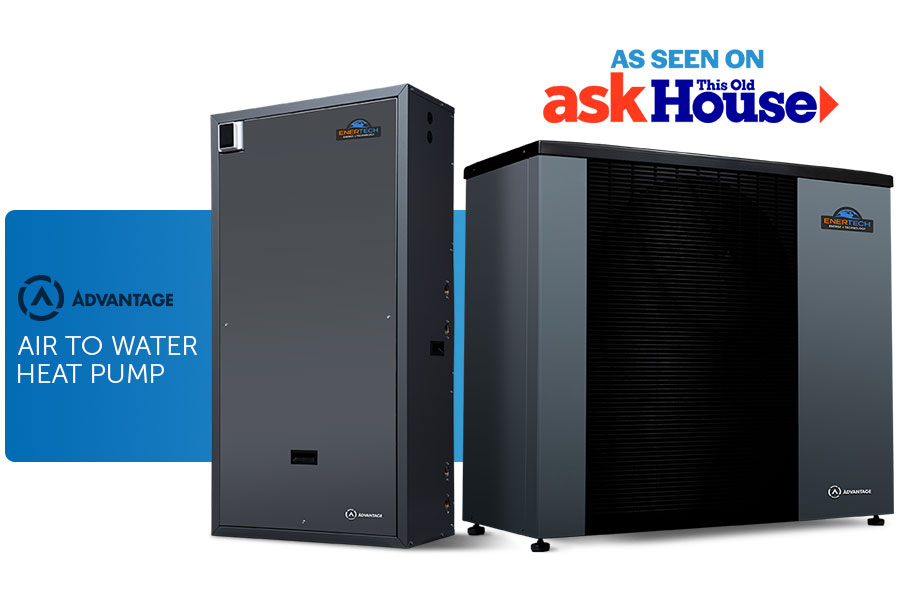
As the needs and wants of our customers and home and building owners evolve, our goal at Enertech is to be where energy meets technology. We started with geothermal heat pumps and more recently broke into the air-source space with our Advantage air-to-water heat pump. It looks like we aren’t the only ones excited about what this product offers! Retrofit magazinelisted the Advantage as one of its Top 25 Products in 2021. Let’s dive into the advantages of the Advantage, according to retrofit and its readers.
At Enertech, the intersection of energy and technology is at the core of what we do. It started with geothermal heat pumps and, as we grow to understand the evolving needs of our customers and homeowners, continues with broader technological innovations – such as our Advantage heat pump. Homeowners aren’t the only ones taking notice of this unique product! As seen on This Old House®, the Advantage offers a wide variety of benefits unique to the unit. Let’s look at some of the key features highlighted in that episode.
As we close out Enertech’s 25th year of business, I’ve got some exciting news to share. I’m transitioning from full-time to part-time Chief Executive Officer (CEO) effective January 1, 2022. Tim Wright and Dan Jackson are taking on a co-leadership role to oversee day-to-day operations.
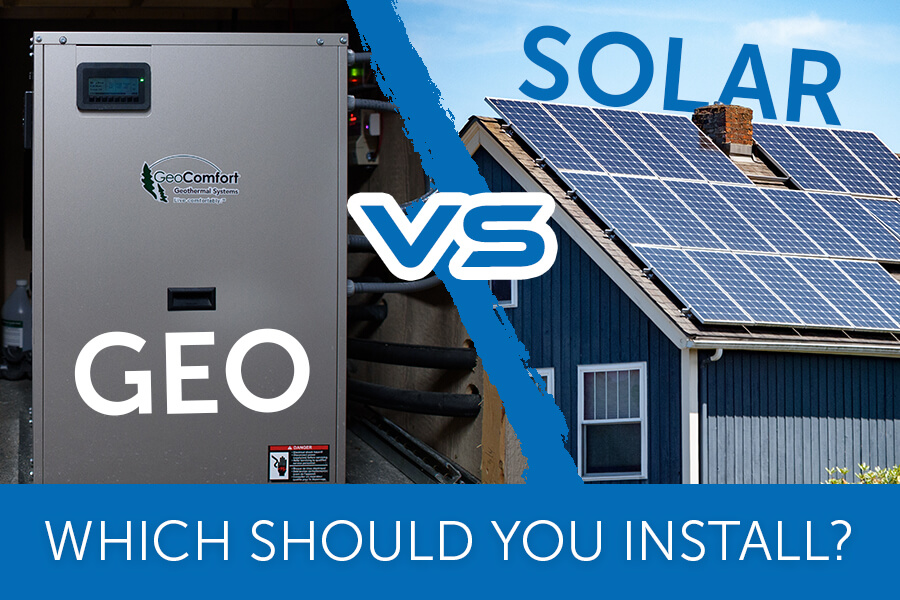
If you’re looking to make a large impact on your monthly utility bills, your research will undoubtedly tell you that you need to do one (or both) of two things: Generate your own power or drastically reduce your energy usage. In most commercial and residential situations, the best option for power generation is going to be solar PV modules or panels. Most other sources of renewable energy generation aren’t commonly available or accessible. Since, according to EnergyStar.gov, the average household’s energy bills are 55% heating, cooling, and hot water, the HVAC system is the largest place for savings. Geothermal is the most efficient and sustainable option in this category, so it’s a strong option for families who want to reduce their energy spending.
However, most people can’t install both technologies at once. Installing both would be a large project with lots of logistics and a hefty combined installation cost, so it’s more reasonable to install either geothermal OR solar, begin to see the benefits, and take the next step a few years down the road. The question is this: Which one should you install first? Let’s look at the benefits of each technology, how they fit into the timeline of creating a sustainable home, and which technology you should go with first to get the maximum dollar-for-dollar returns.